

Introducingthe Bryston SP-3
- 20 Sep 2026
- Проекторы и Домашние кинотеатры
- 8 Прочтений
- 0 Комментариев
Taking home theater to the next level
The Bryston SP-3 preamplifier/processor represents a revolutionary approach to home theater. Most surround processors are more like computers that process audio and video—bells and whistles are more important than ultimate sonic performance. The SP-3 is first and foremost an AUDIO product. From our Class A discrete circuitry, separate analog and digital power supplies plus modular construction for easy updating, the SP-3 simply extracts the audio portion of the signal from the HDMI inputs for processing while properly switching the video, routing it untouched to your display. The fast-paced world of video formats can change as they may, however the Bryston SP-3 will remain a trusted long term solution for your multi-channel audio system.
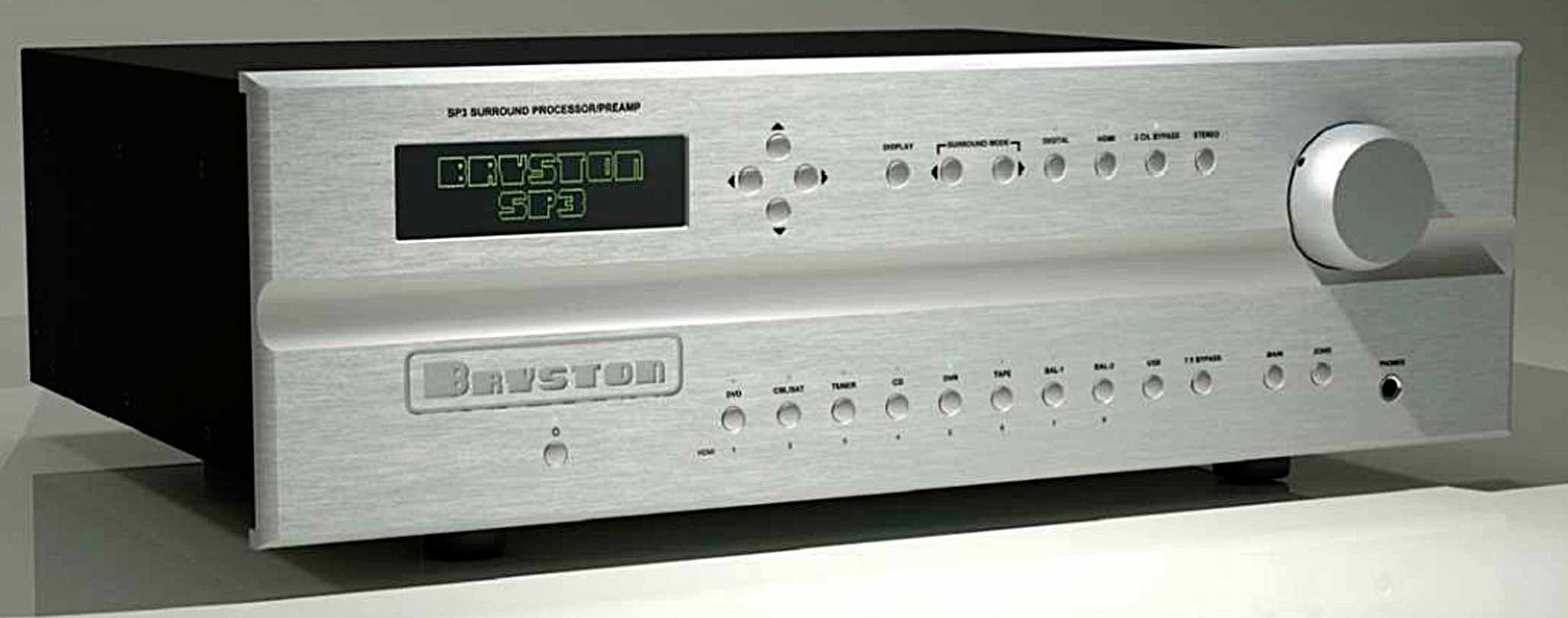
Performance without compromise
With today's increased clarity and dynamic range in recordings and non-compressed movie sound-tracks (DolbyTrueHD, DTS- HD Master Audio, etc.), you need equipment that not only equals but surpasses the parameters of the most demanding material available.The SP-3 preamplifier/processor is without peer in meeting this performance challenge.
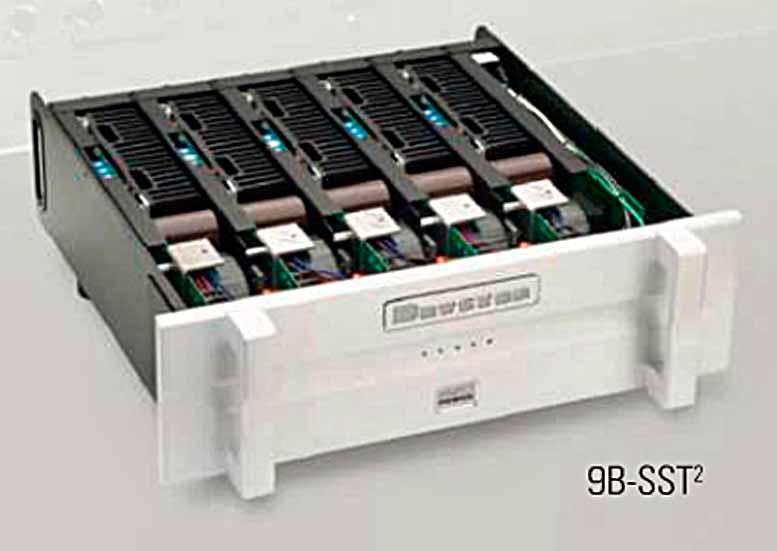
The ultimate home theater solution with Bryston's matching 5-channel amplifier.
Connections inputs: VIDEO: HDM11.4 (4), component video (1, shared), composite video (1 shared), antenna AUDIO: Stereo analog (1)
Outputs: AUDIO: Optical digital (Toslink, 1), IR (1) ADDITIONAL: EX-Link (service, 1), USB 2.0 (3), LAN (1), Audio Return Channel (with compatible AVR), Port for Samsung's Evolution Kit
But a small subset of dark source material can be truly brutal on a video display, and on such scenes, the Samsung couldn’t quite keep up with the Kuro. At 2 minutes and 10 seconds into Avatar, there’s a dense star field overlaid with the brightly lit transport ship bringing Jake Sully and others to Pandora. The Samsung did reasonably here, but the black of space between the stars was clearly deeper and darker on the Pioneer. At the beginning of chapter 12 of Harry Potter and the Deathly Hallows: Part 2, Voldemort and his assembled minions stand on a bluff overlooking Hogwarts as the “camera” pans around them. This scene remained dark where it needed to be dark on the Pioneer, accompanied by respectable shadow detail, while the characters’ marginally brighter heads clearly popped from the murk}' shadows. On the Samsung, the image appeared as a range of washed-out grays, including the black bars. But while the Samsung couldn’t equal the Pioneer on such killer material, the comparison was noticeably closer than with the Samsungs Black Optimizer turned off.
But the Black Optimizer wasn’t a free lunch. In its Dark Room setting, it slightly crushed the blacks, though not enough to show up on our test patterns or to require a change in the other control settings. This was visible on much of the last hour of the Potter movie. In this regard, the image looked better with Black Optimizer off, so you have two options, neither of which is totally free of trade-offs.
All that said, none of the differences described was obvious without a direct comparison. And almost any degree of room lighting washed out these set- to-set distinctions. Also keep in mind that the Samsung can be driven to higher brightness levels (though not LCD levels) than the Pioneer and retails for less than half of what my non-3D Kuro did back in 2009. The Samsungs extra brightness on 2D is of little use to me—as noted earlier, I find that the roughly 30 ft-L I can reach on the Pioneer is more than satisfying in the subdued room lighting I prefer. Many users will have different priorities.
3D Performance
Pre-calibration, the Samsungs 3D color deviated considerably from ideal but was watchable enough that the average viewer won’t likely be troubled by it. Calibration required a fair amount of work, and while the result couldn’t match the sets 2D performance, it was respectable.
Resolution in 3D was every bit as good as in 2D, and the subjective black level was better—mainly because of the overall dimmer image through the active 3D glasses. While there was some visible 3D crosstalk (ghosting), it was relatively subtle and easy (for me at least) to ignore. Overall, however, the Samsung’s 3D performance was satisfying.
But there were issues. While peak 3D brightness, postcalibration, was just under 8 ft-L, a respectable level for 3D, no plasma we’ve yet tested can equal the vivid 3D you’ll see from the best LCD sets. Moreover, much of the Samsungs visible 3D brightness was bought at the price of a startlingly low gamma even at the minimum setting (-3) of the Gamma control (see HT Labs Measures). This low gamma was likely a deliberate compromise to make the 3D picture look as bright and punchy as possible despite the relatively low peak 3D brightness. But the low gamma did make many scenes look a little less saturated than they ought to be. Because of the dark 3D glasses, the latter effect was far subtler than it would be in a low gamma 2D picture—in fact, I suspect most viewers won’t notice the slight desaturation at all. (See HT Labs Measures for more on the difficulty in measuring true gamma on a plasma.)
More significantly, however, there were intermittent, abrupt changes in the picture brightness and saturation on most 3D material I watched. While this effect was never severe, it was noticeable—sometimes obviously so (on Avatar, for example) though usually harder to spot (on, say, A Christmas Carol or Captain America). I’ve never seen this before on a 3D display, and my best guess is that it’s a result of the set’s low and varying gamma. Samsung seems to be aware of the issue and told us that a firmware update to correct this will be forthcoming.
Conclusions
I had some issues with the Samsung’s 3D performance, though it’s likely to satisfy all but the most rabid 3D purist. But 2D on the set was a joy to watch, with rich color, superb resolution, and subjectively fine black levels and overall image saturation on all but the most torturously challenging, dark, low-contrast scenes. If the PN60F8500’s overall black levels are not as killer as from our reference, they’re still among the best we’ve seen from today’s sets and contribute dramatically to the Samsung’s superb overall 2D performance.
***





Letzte Kommentare
Artikel
Fotos
Eigene Seiten